

Ketosis for amateurs and professionals
Источник: The DairyNews
When asked about Ketosis and Displaced Abomasum (AB), the majority of Russian dairy farmers will reply that this is an issue that they “understand well and have under control” and that it is not causing them excessive economic loss. The truth, however, may be somewhat removed from this superficial appraisal.
The reality is that ketosis can affect as many as 30% to 60% of cows in a herd and will mostly be sub-clinical in nature. Fatter cows (High Body Condition Scores) are more likely to experience problems during calving and difficulty in conceiving by AI (Artificial Insemination). These same cows are more prone to other metabolic diseases and demand increased veterinary intervention on multiple fronts. Milk production can suffer appreciably during the course of a year, while cows with ketosis are more likely to develop mastitis. Non-responsive ketosis usually necessitates removal from the milking herd. Sub-clinical ketosis is known to produce an increased likelihood of cystic ovaries (infertility), metritis, clinical ketosis, displaced abomasum and retained placenta. As a direct consequence, these conditions are then linked to economic losses due to increased culling, reduced fertility and less milk.
Ketosis (or Hyperketonemia) and subclinical ketosis is defined as the presence of elevated ketone bodies in the blood, namely, more acetone, acetoacetate and beta-hydroxybutyrate (BHBA); which in turn negatively impact milk production, animal health, and profitability. Ketosis is a metabolic disease that occurs as a result of a Negative Energy Balance (NEB) in cattle and is often under-recognised on many dairy farms.
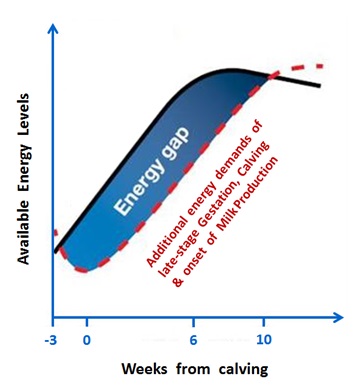
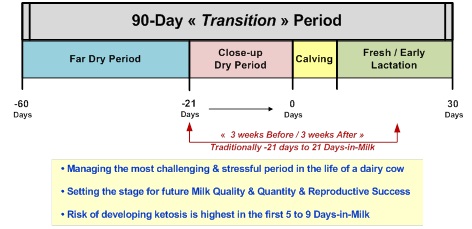
Calving represents a predictable and severe stress in the life of a dairy cow. It needs to be managed correctly so as to avoid a Negative Energy Balance or “Energy Gap”. This phenomenon occurs in its most pronounced form in fresh cows, i.e. in the days to weeks immediately following calving and needs to be actively managed throughout what is termed the “Transition” Period (See Figure). Cows naturally eat less around calving and this phenomenon serves to exacerbate the “Energy Gap”, while if lack of appetite is prolonged, the cow will develop Ketosis. Therefore, it is critically important to optimise food intake in fresh cows.
Tremendous metabolic and endocrine adjustments are required as dairy cows move from late gestation to early lactation. Requirements for glucose and metabolisable energy increase two- to three- fold following calving. At this time of physiological stress, a lack of access to sufficient energy in the daily intake of food and nutrients can give rise to an “Energy Gap”. This “Energy Gap” arises due to a lack of sufficient sugar levels in the blood and more particularly, glucose. Glucose is the universal fuel required for energy metabolism and synthesis in all mammalian cell types.
Today, we understand well the biochemical mechanisms that give rise to ketosis. This understanding is closely linked to the Krebs Cycle of biochemistry (Tricarboxylic Acid Cycle or “TCA” cycle) based on the work of Sir Hans Adolf Krebs conducted at the University of Sheffield in the 1930’s. At the time, he had been forced to abandon a university position due to new anti-Jewish legislation introduced by Nazi Germany. This major break-through was awarded the Nobel Prize for Physiology and Medicine in 1953 and explained how mammalian cells derived energy from Sugar and / or Fatty acids. These same processes that underpin energy metabolism are intimately linked to whether or not ketone bodies make their way into the blood stream during the transition period around calving. There exists a clear-cut dichotomy or “tipping-point” between the animal exploiting energy derived from daily food intake in the form of blood sugars or calling upon stored fat and protein. The latter gives rise to the deleterious side-effect of Ketosis and / or sub-clinical Ketosis and result from an increase in fat metabolism and as a direct consequence the presence of more ketone bodies in the blood. The traditional cut-off this metabolic illness is established at ≥ 1.4mmol of BHBA per litre of blood.
It is in the dairy farmer’s best interests to maintain the energy balance in favour of Glucose metabolism (Desirable and based on energy derived from the rumen and daily food intake) as opposed to energy derived from Stored Fat (Undesirable and giving rise to Ketosis). A switch towards a dependence on stored fat reserves causes ketones to make their way to the animal’s blood stream and give rise to physiological symptoms known as “Ketosis”.
Ketosis is fundamentally a disease of dry cows that manifests itself in fresh cows. This occurs when the cow is mobilizing body fat faster than the liver is able to metabolize it. In order for the liver to normally metabolize fat, glucose is required. If glucose availability is limited, ketosis results because of the inability of the liver to convert the fat to energy. Along with loss of appetite, mobilization of body fat is a normal part of the onset of lactation. As the rate of fat mobilization rises, levels of non-esterified fatty acids (NEFA's) circulating in the blood begin to rise. If these NEFA’s accumulate to significant amounts, the liver switches away from TCA towards ketogenesis in an attempt to provide more energy and eliminate the build-up of NEFA’s. Thus, ketones are best viewed as extra fuel for liver tissue. In turn, these ketones are potent appetite suppressants which in turn exacerbate the level of metabolic disease and the onset of an increasingly vicious cycle of loss of body condition in the affected animal.
The unwelcome side-effects of Ketosis can be avoided by paying greater attention to appropriate food intake and linking these efforts to more frequent blood and or milk sampling in transition cows, i.e. so as to more accurately predict and thereby prevent the onset of ketosis (Predictive Analytics). These measures can result in higher milk production across the herd. Put simplistically, one must optimise food intake so as to meet the transitional cow’s energy demands and in so doing limit the use of stored body fat and protein from becoming the early-lactation cow’s principal source of energy for maintaining body function and high levels of milk production.
A list of deleterious effects that result from an excessive mobilisation of body reserves (Fat and Protein) during the Transition Period include:
o Ketosis and body wasting
o Increased risk of Displaced Abomasum
o Increased risk of Fatty Liver
o Decreased Milk Production
o Immuno-suppression and thus increased susceptibility to disease
o Higher risk of Mastitis and Metritis
o Low levels of colostrum production
o Slower follicle growth and thus Delayed Oestrus resulting in costly extension of the inter-calving period
o Delayed Uterine Involution
o Retention of the Placenta
o Calving difficulties (Dystocia)
o Delayed uterine repair post-partum
o Lower pregnancy rates due to a combination of the above, thus higher Artificial Insemination (AI) costs.
o Increased veterinary costs and animal culling
The above list of symptoms are more frequent in high Body Condition Score animals at transition and can arise in all animals with inadequate diet just preceding and just following calving. For expert advice, see a series of best practice notices for transitional cow management, cf URL: http://www.dairyaustralia.com.au/Pastures-and-Feeding/Supplements-and-nutrition/Transition-cow-management.aspx
Diagnosis :
Outward signs of Ketosis include a lack of appetite, weight loss, a characteristic ‘pear odour’ on the cow’s breath, depressed milk production and either pronounced lethargy or pronounced excitability. Physiologically symptoms include hypoglycemia and high levels of circulating NEFA’s and ketone bodies. Using a variety of methods, ketosis can be detected in blood, milk and urine. Clinical Ketosis is defined as more than 1.4 mg/ml of BHBA present in circulating blood. Levels found in milk and urine generally reflect those in blood, but the scientific literature has examples of both discrepancies and consistencies in the measurement of ketones in blood with those in other body fluids. Thus, estimates derived from other analyses of milk and urine should be validated in blood. Portable cow-side blood sampling meters are available for use in dairy cattle. In fresh cows, these tests should be conducted ideally two to three times per week for the first three weeks-in-milk. Larger herd size makes this less practical and the virtues of milk- based tests come to the fore (See later). It should be noted that measures such as Fat: Protein ratio of >1.25 as derived from Milk Recording Sheets is an unreliable indicators of ketosis.
Treatment:
Approximately 85% of cows respond positively to a single intravenous dose of 500ml of 50% dextrose or 300ml of propylene glycol once daily for three days. Some veterinarians choose to supplement the above treatments with insulin to help block fat mobilisation and vitamin B complex. This can be followed by oral drenches of propylene glycol or calcium propionate gels as necessary. If there is a high incidence of ketosis in the herd (>25%), one should consider giving all fresh cows propylene glycol orally as a preventative measure, thus obviating the need for cow-side blood testing. The principal objective is to get affected cows back to feeding normally and thereby re-establishing a POSITIVE Energy Balance as quickly as possible.
Prevention:
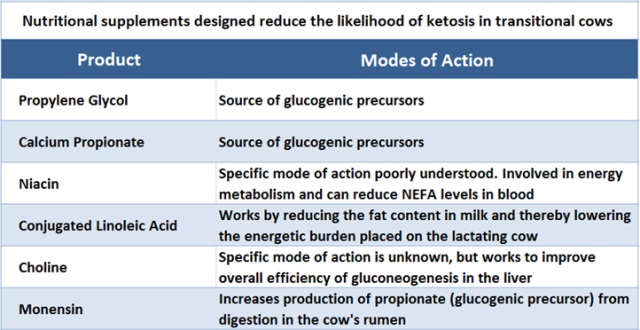
During the Transition Period, the supply of glucogenic precursors must be managed carefully. The most cost-effective is propionate derived naturally from carbohydrate fermentation in the rumen. Protein in the diet can also assist in this process by supplying glucogenic amino acids. To assist in this process, nutritional supplements can be added to the diet (See Table). Attention should also be paid to the Dietary Cation/Anion Difference (DCAD) so as to avoid an excessively acidic metabolic state. (Cations have a positive charge, e.g. sodium, potassium, calcium and magnesium; and Anions have a negative charge, e.g. chloride, sulphur and phosphorous). The pH of the cow's urine is a good approximation of any nutritional imbalance. A desirable DCAD is best achieved by accurately monitoring the mineral content of the cow's diet. Although not all minerals are nutritionally available to animals, attention should be paid to the ratio of cations and anions present in drinking water. If severely acidic or basic, the dairy farmer should work to adjust pH closer to neutrality. It is important that any mineral supplements in either food or water be introduced gradually into the cow's regimen in advance of transition, i.e. so as to avoid issues of unpalatability and thereby lower appetite still further during transition.
Ketosis can be avoided by accurately monitoring the dietary intake of transition cows through the routine analysis of fat, protein, moisture, starch and crude fiber in cow feed. Notably, any reduction in Dry Matter Intake (DMI) substantially increases the risk of ketosis in fresh cows. A balanced transition diet for cows and heifers is essential for a full 3 weeks before calving. A good common sense message is to feed high quality forage that stimulates appetite and thereby allows your cows to realise their maximum genetic potential.
Since 2007, the EU has authorized the use of slow-release boluses containing the active ingredient, Monensin (cf Table) for the control of Ketosis. This represents a high-cost therapy and thus is recommended only for high-risk animals, such as, polyparity at ≥ 3; twins; or very high or very low Body Condition Score (BCS) cows.These boluses need to be administered 3-4 weeks before calving in order to give the rumen sufficient time to adjust. They are slow release (400mg/day) and will cover the first 70 days of lactation. They have a 0 Day withdrawal period for both milk and meat.
Some simple measures to avoid ketosis by focusing on Diet:
1) Provide adequate dietary energy
2) Introduce transition diet, namely a DCAB-adjusted milking ration to the dry cows from 2-3 weeks before calving to allow the cow’s rumen time to adjust
3) Maximise palatability of daily food intake by inclusion of good quality forage in the Total Mixed Ration
4) Maximise feeding by keeping food available and ‘pushed up’
5) Ensure an adequate amount of feeding space, particularly when springers are mixed with older cows
6) Avoid any sudden changes to diet – Gradual changes are always best
7) Higher fiber levels in food encourage rumination and thus extraction of glucogenic precursors from fodder
• A good rule of thumb is at least 45% of Dry Matter Intake (DMI)
• Remember: DMI is the driver behind early cycling and reproductive success, not the onset milk production
8) Inclusion of fatty acid sources, such as, canola seed, linola seed, or flaxseed at maximally 7% of dietary DMI. This will enrich the rations for oleic, linoleic, or linolenic acids.
Other benefits of a successful transition feeding program:
- Prevention of Milk Fever
- Reduction of Retained Foetal Membranes
- Fewer assisted calvings
- Less post-natal vaginal discharge
- Reduction of acidosis and lameness
- Less time and money spent on treating sick and ‘downer’ cows
- Increased fertility rates post-partum
- Increased milk production
Predictive Analytics
Increasingly, Centralised Milk Testing conducted monthly for each dairy cow as part of an overall Dairy Herd Improvement strategy is seen a meaningful way in which to better monitor sub-clinical ketosis and predict the onset of Ketosis. Mathematical algorithms can provide a means to accurately predict and therefore avoid conditions likely to produce ketosis in the dairy herd. This appraisal also allows for more subtle optimisation of production cost-benefit. This cost-benefit can be further maximised by linking CMT to regular analysis of food intake for fat, protein, moisture, starch and crude fiber. While blood sampling is the preferred method for ketosis detection, this is less practical in larger herds where 100’s of fresh cows may require regular (every few days) cow-side blood analysis. Here, the dairy farmer should consider more frequent milk screening of fresh cows for ketone bodies as a time- and cost- effective means of high-throughput ‘predictive’ ketosis screening for both animals with disease and those at greatest risk.
Cost of ketosis to the dairy farmer
Finally, it is important to appreciate the economic losses that arise from both clinical and subclinical ketosis in the dairy herd. Most importantly, cows suffering from this condition will produce less offspring and therefore less milk in their life history. This can translate to an estimated 1.0 – 1.5 kgs less milk per day during peak milk production and a loss of some 200 kgs to 300 kgs per cow during a 305-day annual milking cycle. Remember that one clinical case of ketosis always represents the ‘Tip of an Iceberg’ within a given herd and thus economic losses are usually under-estimated. Direct costs to the dairy farmer include veterinary bills, stockman’s time, discarded milk and indirect costs are linked predominantly to calving difficulties (dystocia); while indirect costs are attributable to an increased incidence of displaced abomasum, decreased fertility, increased culling and calves that are more likely to die at birth or get sick or die at an early age.
Conclusion
Timely and proper interventions as outlined above can help achieve the ultimate goal of a commercial dairy farm, namely, a dairy herd comprised of healthy cows producing high Volumes of good Quality milk. Monthly access to Centralised Milk Testing and integration of the results obtained with Dairy Herd Improvement management practices inside the Russian Federation could quite feasibly deliver an additional one ton of milk per annum per cow, i.e. if the incidence of clinical and sub-clinical mastitis and ketosis was minimized through improved monitoring of Cow Health and Milk Quality.
Doctor Ian Humphery-Smith,
Lecturer for medical and veterinary students for infectious diseases and molecular biology for 7 years
Founded of the Human Proteome Organisation to take-up the gauntlet of the next phase of the Human Genome Project
Director of International Business Development at the Skolkovo Foundation
Consultant for multinational corporations across Space, IT, Biomedicine and Energy sectors
Presently the Head of private sector investment in Skolkovo RusInnovations
Ketosis (or Hyperketonemia) and subclinical ketosis is defined as the presence of elevated ketone bodies in the blood, namely, more acetone, acetoacetate and beta-hydroxybutyrate (BHBA); which in turn negatively impact milk production, animal health, and profitability. Ketosis is a metabolic disease that occurs as a result of a Negative Energy Balance (NEB) in cattle and is often under-recognised on many dairy farms.
Calving represents a predictable and severe stress in the life of a dairy cow. It needs to be managed correctly so as to avoid a Negative Energy Balance or “Energy Gap”. This phenomenon occurs in its most pronounced form in fresh cows, i.e. in the days to weeks immediately following calving and needs to be actively managed throughout what is termed the “Transition” Period (See Figure). Cows naturally eat less around calving and this phenomenon serves to exacerbate the “Energy Gap”, while if lack of appetite is prolonged, the cow will develop Ketosis. Therefore, it is critically important to optimise food intake in fresh cows.
Tremendous metabolic and endocrine adjustments are required as dairy cows move from late gestation to early lactation. Requirements for glucose and metabolisable energy increase two- to three- fold following calving. At this time of physiological stress, a lack of access to sufficient energy in the daily intake of food and nutrients can give rise to an “Energy Gap”. This “Energy Gap” arises due to a lack of sufficient sugar levels in the blood and more particularly, glucose. Glucose is the universal fuel required for energy metabolism and synthesis in all mammalian cell types.
Today, we understand well the biochemical mechanisms that give rise to ketosis. This understanding is closely linked to the Krebs Cycle of biochemistry (Tricarboxylic Acid Cycle or “TCA” cycle) based on the work of Sir Hans Adolf Krebs conducted at the University of Sheffield in the 1930’s. At the time, he had been forced to abandon a university position due to new anti-Jewish legislation introduced by Nazi Germany. This major break-through was awarded the Nobel Prize for Physiology and Medicine in 1953 and explained how mammalian cells derived energy from Sugar and / or Fatty acids. These same processes that underpin energy metabolism are intimately linked to whether or not ketone bodies make their way into the blood stream during the transition period around calving. There exists a clear-cut dichotomy or “tipping-point” between the animal exploiting energy derived from daily food intake in the form of blood sugars or calling upon stored fat and protein. The latter gives rise to the deleterious side-effect of Ketosis and / or sub-clinical Ketosis and result from an increase in fat metabolism and as a direct consequence the presence of more ketone bodies in the blood. The traditional cut-off this metabolic illness is established at ≥ 1.4mmol of BHBA per litre of blood.
It is in the dairy farmer’s best interests to maintain the energy balance in favour of Glucose metabolism (Desirable and based on energy derived from the rumen and daily food intake) as opposed to energy derived from Stored Fat (Undesirable and giving rise to Ketosis). A switch towards a dependence on stored fat reserves causes ketones to make their way to the animal’s blood stream and give rise to physiological symptoms known as “Ketosis”.
Ketosis is fundamentally a disease of dry cows that manifests itself in fresh cows. This occurs when the cow is mobilizing body fat faster than the liver is able to metabolize it. In order for the liver to normally metabolize fat, glucose is required. If glucose availability is limited, ketosis results because of the inability of the liver to convert the fat to energy. Along with loss of appetite, mobilization of body fat is a normal part of the onset of lactation. As the rate of fat mobilization rises, levels of non-esterified fatty acids (NEFA's) circulating in the blood begin to rise. If these NEFA’s accumulate to significant amounts, the liver switches away from TCA towards ketogenesis in an attempt to provide more energy and eliminate the build-up of NEFA’s. Thus, ketones are best viewed as extra fuel for liver tissue. In turn, these ketones are potent appetite suppressants which in turn exacerbate the level of metabolic disease and the onset of an increasingly vicious cycle of loss of body condition in the affected animal.
The unwelcome side-effects of Ketosis can be avoided by paying greater attention to appropriate food intake and linking these efforts to more frequent blood and or milk sampling in transition cows, i.e. so as to more accurately predict and thereby prevent the onset of ketosis (Predictive Analytics). These measures can result in higher milk production across the herd. Put simplistically, one must optimise food intake so as to meet the transitional cow’s energy demands and in so doing limit the use of stored body fat and protein from becoming the early-lactation cow’s principal source of energy for maintaining body function and high levels of milk production.
A list of deleterious effects that result from an excessive mobilisation of body reserves (Fat and Protein) during the Transition Period include:
o Ketosis and body wasting
o Increased risk of Displaced Abomasum
o Increased risk of Fatty Liver
o Decreased Milk Production
o Immuno-suppression and thus increased susceptibility to disease
o Higher risk of Mastitis and Metritis
o Low levels of colostrum production
o Slower follicle growth and thus Delayed Oestrus resulting in costly extension of the inter-calving period
o Delayed Uterine Involution
o Retention of the Placenta
o Calving difficulties (Dystocia)
o Delayed uterine repair post-partum
o Lower pregnancy rates due to a combination of the above, thus higher Artificial Insemination (AI) costs.
o Increased veterinary costs and animal culling
The above list of symptoms are more frequent in high Body Condition Score animals at transition and can arise in all animals with inadequate diet just preceding and just following calving. For expert advice, see a series of best practice notices for transitional cow management, cf URL: http://www.dairyaustralia.com.au/Pastures-and-Feeding/Supplements-and-nutrition/Transition-cow-management.aspx
Diagnosis :
Outward signs of Ketosis include a lack of appetite, weight loss, a characteristic ‘pear odour’ on the cow’s breath, depressed milk production and either pronounced lethargy or pronounced excitability. Physiologically symptoms include hypoglycemia and high levels of circulating NEFA’s and ketone bodies. Using a variety of methods, ketosis can be detected in blood, milk and urine. Clinical Ketosis is defined as more than 1.4 mg/ml of BHBA present in circulating blood. Levels found in milk and urine generally reflect those in blood, but the scientific literature has examples of both discrepancies and consistencies in the measurement of ketones in blood with those in other body fluids. Thus, estimates derived from other analyses of milk and urine should be validated in blood. Portable cow-side blood sampling meters are available for use in dairy cattle. In fresh cows, these tests should be conducted ideally two to three times per week for the first three weeks-in-milk. Larger herd size makes this less practical and the virtues of milk- based tests come to the fore (See later). It should be noted that measures such as Fat: Protein ratio of >1.25 as derived from Milk Recording Sheets is an unreliable indicators of ketosis.
Treatment:
Approximately 85% of cows respond positively to a single intravenous dose of 500ml of 50% dextrose or 300ml of propylene glycol once daily for three days. Some veterinarians choose to supplement the above treatments with insulin to help block fat mobilisation and vitamin B complex. This can be followed by oral drenches of propylene glycol or calcium propionate gels as necessary. If there is a high incidence of ketosis in the herd (>25%), one should consider giving all fresh cows propylene glycol orally as a preventative measure, thus obviating the need for cow-side blood testing. The principal objective is to get affected cows back to feeding normally and thereby re-establishing a POSITIVE Energy Balance as quickly as possible.
Prevention:
During the Transition Period, the supply of glucogenic precursors must be managed carefully. The most cost-effective is propionate derived naturally from carbohydrate fermentation in the rumen. Protein in the diet can also assist in this process by supplying glucogenic amino acids. To assist in this process, nutritional supplements can be added to the diet (See Table). Attention should also be paid to the Dietary Cation/Anion Difference (DCAD) so as to avoid an excessively acidic metabolic state. (Cations have a positive charge, e.g. sodium, potassium, calcium and magnesium; and Anions have a negative charge, e.g. chloride, sulphur and phosphorous). The pH of the cow's urine is a good approximation of any nutritional imbalance. A desirable DCAD is best achieved by accurately monitoring the mineral content of the cow's diet. Although not all minerals are nutritionally available to animals, attention should be paid to the ratio of cations and anions present in drinking water. If severely acidic or basic, the dairy farmer should work to adjust pH closer to neutrality. It is important that any mineral supplements in either food or water be introduced gradually into the cow's regimen in advance of transition, i.e. so as to avoid issues of unpalatability and thereby lower appetite still further during transition.
Ketosis can be avoided by accurately monitoring the dietary intake of transition cows through the routine analysis of fat, protein, moisture, starch and crude fiber in cow feed. Notably, any reduction in Dry Matter Intake (DMI) substantially increases the risk of ketosis in fresh cows. A balanced transition diet for cows and heifers is essential for a full 3 weeks before calving. A good common sense message is to feed high quality forage that stimulates appetite and thereby allows your cows to realise their maximum genetic potential.
Since 2007, the EU has authorized the use of slow-release boluses containing the active ingredient, Monensin (cf Table) for the control of Ketosis. This represents a high-cost therapy and thus is recommended only for high-risk animals, such as, polyparity at ≥ 3; twins; or very high or very low Body Condition Score (BCS) cows.These boluses need to be administered 3-4 weeks before calving in order to give the rumen sufficient time to adjust. They are slow release (400mg/day) and will cover the first 70 days of lactation. They have a 0 Day withdrawal period for both milk and meat.
Some simple measures to avoid ketosis by focusing on Diet:
1) Provide adequate dietary energy
2) Introduce transition diet, namely a DCAB-adjusted milking ration to the dry cows from 2-3 weeks before calving to allow the cow’s rumen time to adjust
3) Maximise palatability of daily food intake by inclusion of good quality forage in the Total Mixed Ration
4) Maximise feeding by keeping food available and ‘pushed up’
5) Ensure an adequate amount of feeding space, particularly when springers are mixed with older cows
6) Avoid any sudden changes to diet – Gradual changes are always best
7) Higher fiber levels in food encourage rumination and thus extraction of glucogenic precursors from fodder
• A good rule of thumb is at least 45% of Dry Matter Intake (DMI)
• Remember: DMI is the driver behind early cycling and reproductive success, not the onset milk production
8) Inclusion of fatty acid sources, such as, canola seed, linola seed, or flaxseed at maximally 7% of dietary DMI. This will enrich the rations for oleic, linoleic, or linolenic acids.
Other benefits of a successful transition feeding program:
- Prevention of Milk Fever
- Reduction of Retained Foetal Membranes
- Fewer assisted calvings
- Less post-natal vaginal discharge
- Reduction of acidosis and lameness
- Less time and money spent on treating sick and ‘downer’ cows
- Increased fertility rates post-partum
- Increased milk production
Predictive Analytics
Increasingly, Centralised Milk Testing conducted monthly for each dairy cow as part of an overall Dairy Herd Improvement strategy is seen a meaningful way in which to better monitor sub-clinical ketosis and predict the onset of Ketosis. Mathematical algorithms can provide a means to accurately predict and therefore avoid conditions likely to produce ketosis in the dairy herd. This appraisal also allows for more subtle optimisation of production cost-benefit. This cost-benefit can be further maximised by linking CMT to regular analysis of food intake for fat, protein, moisture, starch and crude fiber. While blood sampling is the preferred method for ketosis detection, this is less practical in larger herds where 100’s of fresh cows may require regular (every few days) cow-side blood analysis. Here, the dairy farmer should consider more frequent milk screening of fresh cows for ketone bodies as a time- and cost- effective means of high-throughput ‘predictive’ ketosis screening for both animals with disease and those at greatest risk.
Cost of ketosis to the dairy farmer
Finally, it is important to appreciate the economic losses that arise from both clinical and subclinical ketosis in the dairy herd. Most importantly, cows suffering from this condition will produce less offspring and therefore less milk in their life history. This can translate to an estimated 1.0 – 1.5 kgs less milk per day during peak milk production and a loss of some 200 kgs to 300 kgs per cow during a 305-day annual milking cycle. Remember that one clinical case of ketosis always represents the ‘Tip of an Iceberg’ within a given herd and thus economic losses are usually under-estimated. Direct costs to the dairy farmer include veterinary bills, stockman’s time, discarded milk and indirect costs are linked predominantly to calving difficulties (dystocia); while indirect costs are attributable to an increased incidence of displaced abomasum, decreased fertility, increased culling and calves that are more likely to die at birth or get sick or die at an early age.
Conclusion
Timely and proper interventions as outlined above can help achieve the ultimate goal of a commercial dairy farm, namely, a dairy herd comprised of healthy cows producing high Volumes of good Quality milk. Monthly access to Centralised Milk Testing and integration of the results obtained with Dairy Herd Improvement management practices inside the Russian Federation could quite feasibly deliver an additional one ton of milk per annum per cow, i.e. if the incidence of clinical and sub-clinical mastitis and ketosis was minimized through improved monitoring of Cow Health and Milk Quality.
§§§§§§§§
Doctor Ian Humphery-Smith,
Lecturer for medical and veterinary students for infectious diseases and molecular biology for 7 years
Founded of the Human Proteome Organisation to take-up the gauntlet of the next phase of the Human Genome Project
Director of International Business Development at the Skolkovo Foundation
Consultant for multinational corporations across Space, IT, Biomedicine and Energy sectors
Presently the Head of private sector investment in Skolkovo RusInnovations
Популярные темы

05.06.2026
В России назрела необходимость ввести на официальном уровне рекомендации по питанию. Об этом шла речь на сессии в рамках ПМЭФ-2026 «Особенности национального питания: здоровьесбережение как основа суверенитета».Участники ПМЭФ считают, что если запугать потребителя сладким и жирным, он быстро начнет худеть
Читать полностью

Цитаты дня
