

New mastitis tool identifies exact strain for precise treatment


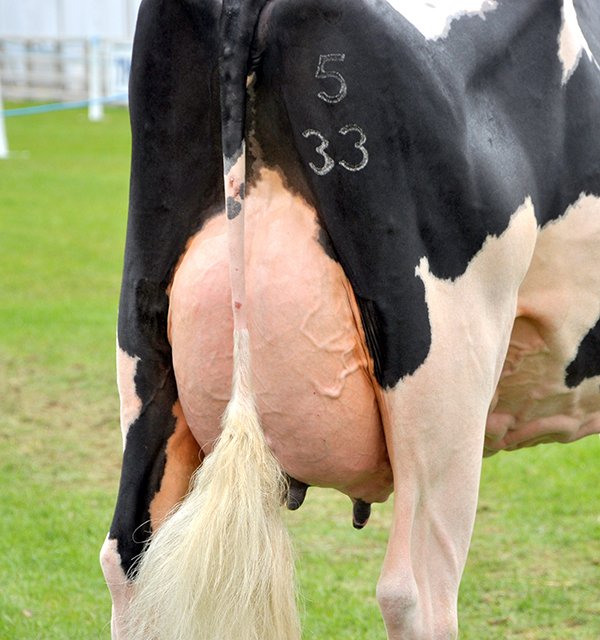
The new Mastitis Pattern Tool has been developed by the AHDB Dairy and Nottingham University Research partnership.
Scientists at the university say this new tool is easy to use and will give farmers and vets a better understanding of the mastitis patterns in the herd, allowing them to better use the vet’s expertise for the prevention of mastitis rather than just treating mastitis once it is present.
Mastitis continues to be one of the most persistent diseases to challenge dairy industries across the world from a health and welfare perspective to the cow and an economic impact to the dairy farmer.
In the past it has been the norm for farmers to treat all four quarters of a dairy cow that was detected with mastitis which was increasing the use of antibiotics and costing the farmer more.
Udder infections costs European farmers billions of euros per year in lost milk sales and increased veterinary expenses therefore targeting precise strains of disease should shave off some costs.
AHDB says that as an industry, and within dairy businesses, there is a lot of data associated with mastitis generated but the challenge comes when trying to use and utilise this data to make informed decisions to combat the disease.
The developers say the Mastitis Pattern Tool identifies problem areas and potential risks to udder health and give farmers and their vets a way of tracking progress in the herd.
The tool provides a fully automated method of assessing the predominant mastitis infection patterns present on farm, using somatic cell count (SCC) and clinical mastitis records.
It produces a mastitis pattern report that allows farmers and vets to assess and prioritise key management areas and potentially detect emerging problems.
Milk recording herds are at an advantage as cow SCC information is readily available. The tool converts and merges records into a simple output allowing farmers to assess the patterns of mastitis in the herd.
Dr Jenny Gibbons, senior dairy scientist at AHDB, said: “As an industry, and within dairy businesses, we generate an immense amount of data associated with mastitis.
“The challenge comes when trying to utilise this data to make informed decisions to combat mastitis within dairy herds.
“This tool provides a fully automated method of assessing the predominant infection patterns present on-farm, using somatic cell count (SCC) and clinical mastitis records.”
Conventional tests used to identify mastitis infections require considerable time, usually 48 hours or longer. Though there are faster testing methods they fail to distinguish between subspecies of bacteria and cannot determine whether the bacteria is resistant to certain antibiotics.
As a result of a lack of fast, affordable and effective testing, veterinarians must often rely on broad-spectrum antibiotics, which increase the pressure on antibiotics and contribute to the increase in antimicrobial resistance.
Recent research has shown that Matrix-Assisted Laser Desorption/Ionization – Time of Flight Mass Spectrometry (MALDI-TOF MS) is one way of overcoming these problems, but only detects the presence of specific bacterial fingerprints in a sample. This necessitates the need for further research to make it a useful tool for veterinarians.
This research aims to see if it is possible to use MALDI-TOF MS to discriminate between penicillin-resistant and non-resistant strains of Staphylococcus aureus.
This will be done by isolating signature patterns obtained from isolates, and then developing a prototype diagnostic tool that recognises the presence of specific strains.
By identifying specific strains of bacteria using a method that returns quick diagnostic data, the mass treatment of dairy cows with broad-spectrum antibiotics could be avoided.
This would have a dramatic effect on the likelihood of resistance appearing in these animals, and help prevent the spread of antimicrobial resistance in the wider ecosystem.
Prof. Martin Green from the University of Nottingham, said: “In the past, it was difficult to recognise mastitis problems in herds until an outbreak emerged.
“But the Mastitis Pattern Tool gives you the ability to effectively track the udder health of your herd. The tool produces a mastitis pattern report that allows farmers and vets to assess and prioritise key management areas and potentially detect emerging problems.”
By Chris McCullough


Цитаты дня
